AI Automation Consultant in Bangladesh: How to Hire One
The timezone arithmetic, what the word consultant has to mean before it is worth paying for, and five questions that tell you more than a portfolio.
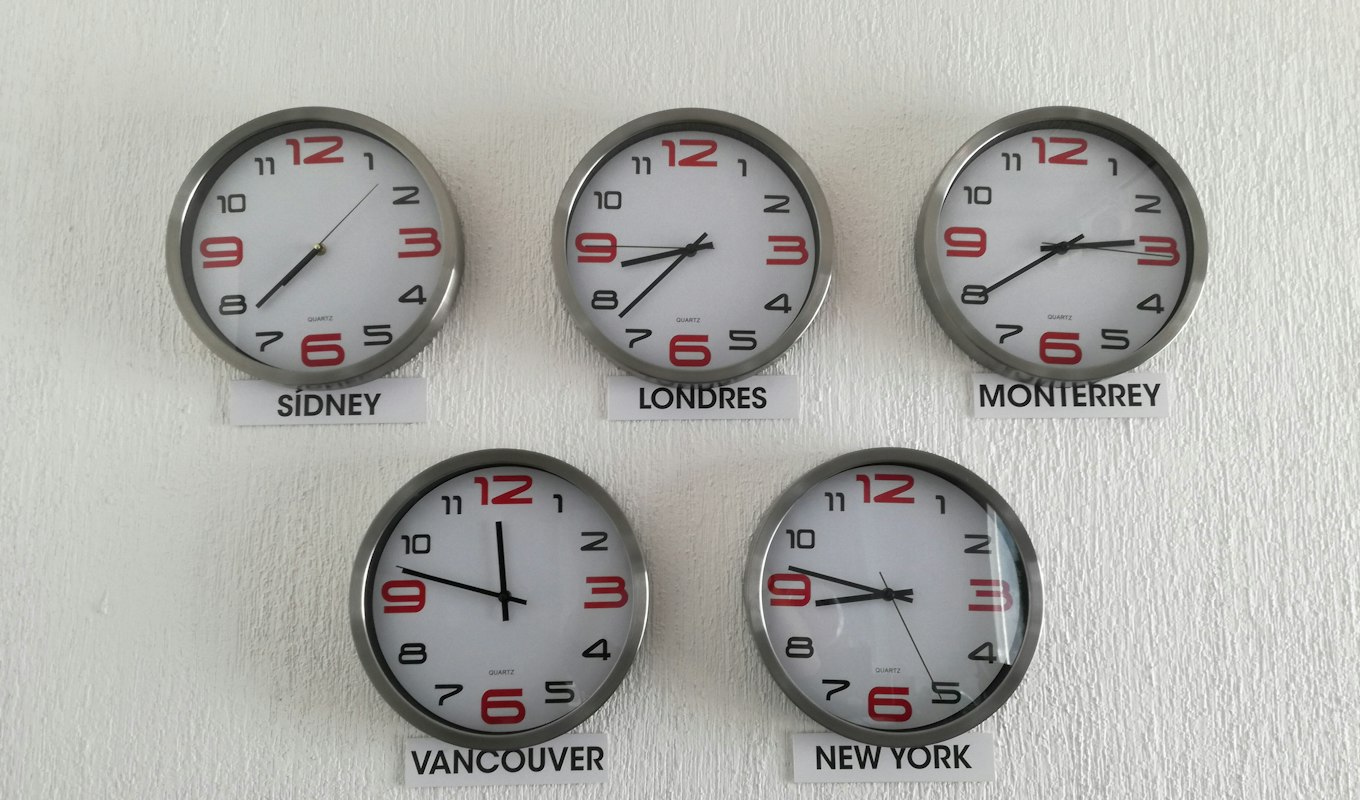
If you are searching for an AI automation consultant in Bangladesh, you are almost certainly one of two people. Either you run a business somewhere else — Europe, North America, Australia — and you are weighing up whether hiring here is a saving or a risk. Or you run a business inside Bangladesh and you want someone who answers in your own working day. The two situations need different advice, so this covers both, and it is written by someone with an obvious interest in the answer: I am the consultant in question, working from Bangladesh (GMT+6) with clients worldwide.
What follows is the version I would want if I were doing the hiring — the timezone arithmetic, what the word “consultant” has to mean before it is worth paying for, and the five questions that tell you more than any portfolio.
The timezone is the part that actually matters
Everyone worries about the wrong thing here. The worry is usually “will they be awake when I need them”, and the arithmetic settles it quickly. Bangladesh is GMT+6, which puts it in a genuinely convenient place relative to most client markets:
- London is five hours behind in summer, six in winter. A 9am London start is 2pm here, and 5pm London is 10pm here — so your entire working day sits inside mine. This is the easiest pairing there is.
- New York is ten hours behind. Your morning is my evening: 9am in New York is 7pm here. You get a three to four hour live window at the start of your day, which is enough for a standing call and same-day answers.
- Sydney is four hours ahead. Your afternoon is my morning — the same arrangement in reverse.
- Dubai, Singapore, and most of the Gulf and Southeast Asia overlap almost entirely.
There is no major client market where a same-day reply is impossible from here. What changes is which half of your day you get, and that is worth pinning down in the first conversation rather than discovering in week three. Ask for the specific hours, not a reassurance.
The more useful point is that automation work suits this arrangement anyway. A workflow is a deliverable, not a meeting. Most of the build happens without you, and the overlap you need is for decisions — what counts as a qualified lead, who gets the escalation, what the message should say — which are a handful of conversations, not a daily standup.
“Consultant” has to mean something, or you are buying a developer
This is where most of the money gets wasted, and it has nothing to do with geography.
A developer builds what you specify. A consultant works out what is worth building, and says so even when it shrinks the invoice. If you hire a builder and expect a decision-maker, you get exactly what you asked for — which is the problem, because the thing most businesses first ask to automate is rarely the thing costing them the most hours.
The tell is what happens in the first hour. Someone selling build hours will ask which tools you use and start scoping. Someone doing consulting will ask what happens after a lead comes in, who touches it, where it waits, and what breaks when that person is on holiday — and will happily conclude that two of your five requested workflows are not worth the money yet. That conversation is the product. Deciding what to automate first is the whole skill; the building is the easy half.
So before you compare rates, decide which of the two you are buying. Both are legitimate purchases. Paying consultant prices for order-taking is not.
What it costs, and why the cheapest quote usually is not
Rates for independent automation and AI consultants vary enormously by market, and quoting a single global number would be useless. There is a separate breakdown of what the market actually charges in this guide to AI consultant hourly rates, with every range attributed to its source. Bangladesh-based rates sit below Western agency rates — that is the honest reason a lot of this search traffic exists — but the range within Bangladesh is just as wide as anywhere else, and the bottom of it is not a bargain.
I quote projects rather than hours, because hours reward slowness. On this site a single automated workflow starts at $600, a connected set of workflows wired into your real systems is $1,800-tier work, and everything is listed on the pricing page, with 30 days of support after launch included.
The reason the cheapest quote is frequently the expensive one is not skill. It is that cheap automation work is usually built as a demo: it works on the happy path, has no error handling, holds its credentials in someone else’s account, and has no documentation. It runs for two months and then silently stops on a Tuesday, and nobody notices until a customer complains. Rebuilding it properly costs more than building it properly the first time, and you have lost the two months as well. The workflow automation cost breakdown goes through the three cost layers in detail, including when not to automate at all.
Five questions that tell you more than a portfolio
You are hiring someone you will probably never meet, in a market you cannot read from the outside. Portfolios and review scores are weak signals in that situation — both are easy to assemble. These five questions are not:
- “Describe my process back to me.” Ask after you have explained it once. Anyone who understood it will restate it more precisely than you did, and will name the step you glossed over. Anyone who did not will repeat your own words back in the same order.
- “What here would you not automate?” There is always something — a judgement call, a low-volume exception, a relationship that should stay human. Someone with nothing on that list is selling, not advising.
- “Whose accounts will this run in?” The right answer is yours. Your API keys, your billing, your server or cloud account, with them holding access rather than ownership. If the automation lives inside the consultant’s accounts, you have not bought an asset — you have rented one, and the rent gets renegotiated from a position of weakness.
- “What happens when it fails at 3am?” The answer should include retries, a dead-letter path for the items that could not be processed, and an alert to a human. If the answer is “it won’t fail”, the conversation is over. Everything fails; the design question is whether it fails loudly or quietly.
- “What exactly do I get at handover?” A real answer is a list: exported workflow files, credentials in your own accounts, a written runbook, where the logs live, and how to reach someone. A vague answer means there is no handover, which means there is no exit.
Question three is the one people skip and regret. Ownership is the difference between a system and a dependency.
If your business is in Bangladesh
Everything above still applies, and two things get easier. You are in the same working day, so the decision conversations happen faster. And invoicing and payment happen locally, which removes the international transfer friction that makes small projects annoying on both sides.
Two things are specific to local work and worth saying plainly. First, if your customers write to you in Bangla, in English, or in the mix of both that most people actually type, that has to be in the brief from the start — it changes how a chatbot is built and how it must be tested, and it is not something to discover at review. Second, the payment and delivery systems you already use are the integrations that matter most, and an automation that cannot see your payment confirmations is doing half a job. Name those systems early; the shape of the whole project follows from them.
The narrower versions of this question
If you already know roughly what you need built, rather than what you need decided, the specific guides are more useful than this one:
- Hiring an n8n developer — what separates someone who can demo a workflow from someone whose workflows survive six months unattended.
- Hiring an AI chatbot developer — the four things you have to prepare before anyone can build you a good one.
- Hiring a WordPress developer — why quotes for the same brief differ tenfold, and what you actually get at each level.
How I work
Twelve years of building software, three hundred-odd projects delivered, and the last few years spent almost entirely on automation and AI implementation rather than websites. I map the process first, say which parts are worth automating and which are not, then build the ones that are — usually with n8n, self-hosted where the data justifies it, running in your accounts rather than mine. Everything is handed over with exported workflows, a runbook and credentials that belong to you. More about me is on the about page.
If you want to try the five questions above on a real person, book a free intro call — bring the process that annoys you most and we will work out whether it is worth automating at all. If it is not, I will say so, and that is a useful outcome for the price of a conversation.
Key takeaways
- GMT+6 overlaps every major client market — London sits fully inside the day, New York gets the evening, Sydney the morning. Agree the specific hours up front.
- Decide whether you are buying a consultant or a developer. A consultant should be willing to talk you out of work.
- The automation must run in your accounts, on your keys. Ownership is the difference between an asset and a dependency.
- Ask what happens when it fails at 3am. “It won’t” is a failed answer.
- Cheap automation is usually a demo with no error handling. The rebuild costs more than doing it properly once.